


 Dec 31, 2025
 3 min read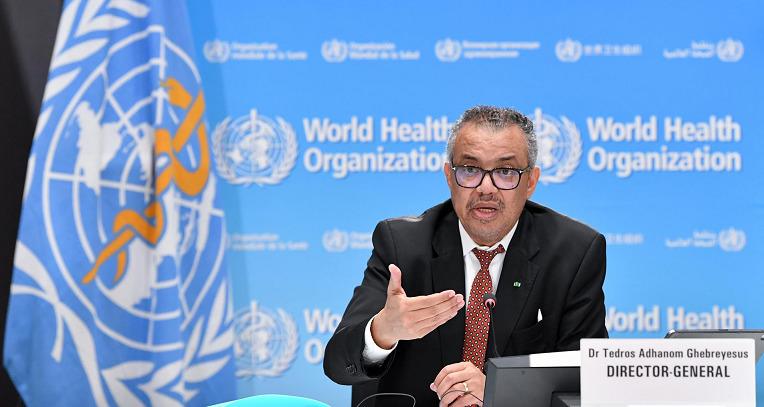
Other achievements include new international health laws, vaccine coverage and the elimination of infectious diseases.
World Health Organization (WHO) Director-General Tedros Adhanom Ghebreyesus has highlighted the Pandemic Agreement 2025 adopted in May as one of the greatest achievements of the year, also highlighting new international health norms as another step of change this year.Both efforts, which he celebrated during a review of the company's balance sheet, will enable faster, more balanced and effective emergency responses for health in the future.
WHO review of the past 12 monthsFocus on scientific evidenceEmphasis is placed on eliminating various diseases.Among countries this year, the Maldives became the first country to triple the elimination of mother-to-child transmission of HIV, syphilis and hepatitis.In Brazil, it has also been recognized for reducing mother-to-child transmission of HIV.For its part, Burundi, Egypt and Fiji have eradicated hemorrhoids, Guinea and Kenya and insomnia.and the blind river NigerIn the case of Georgia, Suriname and East TimorIt is certified as a malaria-free country.
The World Health Organization has presented the most important events for 2025, which emphasize the elimination of diseases and the expansion of global vaccination.
Another milestone identified by the organization is to expand vaccination services to 24 countries worldwide by 2025, after seven African countries introduce a malaria vaccine.Similarly, there has been a focus on expanding vaccination programs against meningitis, pneumococcal disease, polio, rotavirus and human papillomavirus (HPVVV).Recently Bhutan, Brazil, China, Indonesia, Nigeria, Tajikistan, Pakistan and Rwanda have expanded vaccination and HPV screening, bringing the world closer to eliminating cervical cancer.Cervical cancer, 86 million girls have already been vaccinated.
Likewise, the WHO has realized the difficulty of vaccinating other diseases, such as measles, which has seen an increase in cases compared to pre-pandemic levels, and diphtheria, tetanus and polio, with 20 million children not vaccinated due to conflicts, disruptions in supply and the increase in misinformation about vaccines.
Successes in the fight against non-communicable diseases
Non -transferable diseases (NCDs), such as cardiovascular diseases, cancer, diabetes, respiratory diseases and mental health conditions, have also progressed in 2025. WHO announced adopt a political statement in the UN general assembly that established as a 2030 goal to reach 150 million tobacco users 150m and 150 million people with hypertension.
Fewer smokers, more people with controlled hypertension and greater access to mental health care are 2030 goals for controlling non-communicable diseases.
In turn, WHO has issued several scientific evidence-based guidelines to inform clinical practice in the diagnosis and treatment of postpartum hemorrhagic meningitis; gestational diabetes; using kangaroo maternal care to help premature infants; cancer drugs designed for children; and measures for safe viewing of video games.It also launched the World Clinical Trials Forum to promote ethical and inclusive research.The most recent action taken by WHO is the adoption of the Global Strategy for Traditional Medicine 2025-2034, which aims to integrate these practices into health systems based on scientific evidence, safety and quality.
In the year 2025, who answered the dangers in 79 countries, with the Territe, Sudino, Sudinu's president and suitable package income.Release to answer the problems in 30 countries this year.uae groups supported by Whoponed by Whomners.
The group also recalled what they did in Uganda against the Sudan virus, in the United Republic of Tanzania and Ethiopia against the Marburg virus infection, and in the Democratic Republic of the Congo against the Ebola outbreak.On the other hand, they confirmed in September this year that the international health crisis due to mpox has also been brought to an end.More than 1.1 million doses of vaccine have been distributed to protect high-risk people in 11 African countries, where 80% of global mpox infections are recorded.