

 Dec 05, 2025
 3 min read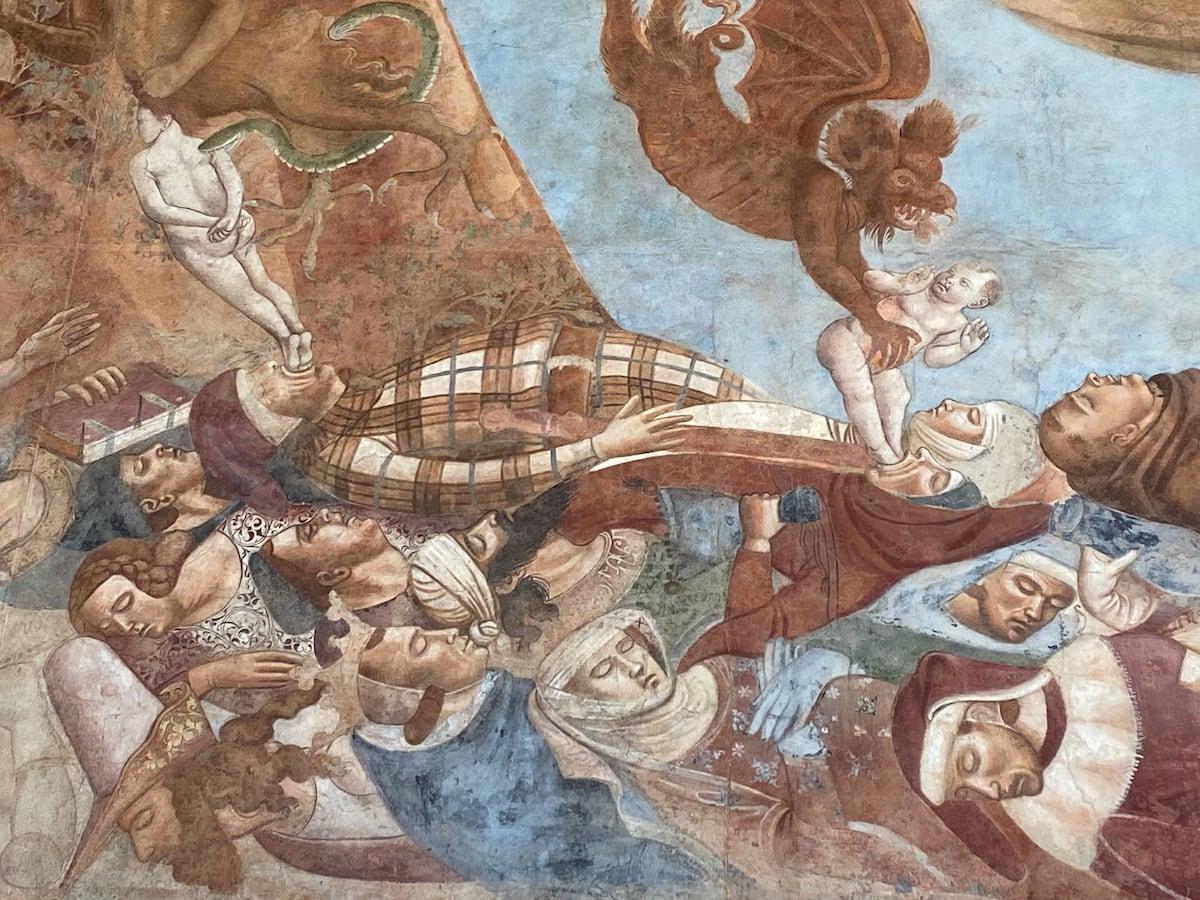
Three years of winter carved into the Pyrenean pine necessitates the import of grain from Central Asia, the source of the Black Death
A volcanic eruption opened Europe's doors to the worst plague in history
A three-year winter on the PYRENES PONS forced the balance of grain from Central Asia, the origin of the Black Death.
Almost everything is known about the Black Death.It was the worst dengue in history (some put it before the 1918 flu).In Europe it arrived first in the Mediterranean courts.It arrived with ships loaded with grain, but also with rats and flies, vectors of the Yerseinia pestis bacterium.That the ships came from the cherries of the Black Sea and the Sea of Aziv, gateways to the lords of Central Asia.And genetics proves that the problem kills It appeared in the wild mountains on the slopes of the Tian Mountains in today's Kyrgyzstan.But why did it end in 1347?Why not in 1348, 1350 or ten years later?The answer is written on some Pyrenean pines.
Researchers from the University of Cambridge (United Kingdom) and the Leibniz Institute for the History and Culture of Eastern Europe (GWZO) believe that they have not discovered the origin of the bubonic plague that originated in Central Asia, but why it punished Europe so much and why it did so.The pandemic ended between 1347 and 1353, killing 80 to 200 million people in seven years and changing European history forever.For example, in the Iberian Peninsula, it killed 65% of the population.In a paper published in the scientific journal Communications Earth & Environment, they detail the sequence of events that led to the disaster.
He found the beginning of it all in some pine trees in the central Pyrenees.They grow only in summer and have strong or weak growth in their stem rings.They found that it had stopped for at least three consecutive summers since 1345. Raul Sánchez, from the University of Pablo de Olavide, is devoted to dendroclimatology."As the summer progresses, trees produce lignin, a polymer, to weaken their cell walls so that there is no heartbeat," explains Sanchez, who was not associated with the study."But when it gets too difficult, they stop making lichens."And they have seen it only in the Pyrenean pines.
What happened to the cold?Immersed in historical records, they are presented in Japanese, Chinese, Chinese and English or English in German or English that is darker in the sky.Having annual anomalies, in the year before the start of the pandemic, signs of several volcanic walls, previous signs, a sign that corresponds to the tree rings.In particular, an unknown volcano erupted in the summer of 1345. This fire released 14 million tons of ash into the atmosphere. In comparison, the disaster in Pinatubo (Philippines) in 1991 was six million and caused global warming of 1.5º.During the year before and after, there were three other fires in the northern hemisphere, although smaller in size.
European agriculture could not endure three such cold years.There are documents that show the loss of grape production in southern Europe.It was too much to harvest corn and without wheat or barley, famine ensued, especially in the cities.At that time, northern Italy was one of the most isolated areas.It was in these cities, the real powers of the time, such as Geneno or Venice, where the first outbreak of the plague was seen.Why?
"A city like Florence could only be self-sufficient in its production for five months of the year and had to import grain even in good years," recalls Martin Bauche, GWZO medieval historian and co-author of the study."Other smaller cities, such as Siena, used to be self-sufficient from the surrounding territories, but in case of a bad harvest, imports were necessary," added Bauch.However, there were also large cities like Milan or Rome that controlled large areas where they almost never had to import grain.significantly, that these were the cities where the Black Death did not break out", he added.
Faced with the threat of shortages and rebellion, Europeans looked east, to the steppes, which were major grain producers yesterday and today.The problem is that at that time the Golden Horde ruled and the two great powers of Italy, Genoa and Venice, were at war against the Mongols."The councils of both cities pushed for a quick peace in the second quarter of 1347," recalls Bauch.in the quarter ships loaded with grain would arrive.And with them the plague.The dates match.All the first epidemics occurred in port cities.In Genoa, the nightmare began in November.In Palma de Mallorca and Marseille in December, and already in January '48 in Venice.The opening of trade in the East prevented death by starvation, but brought on the Black Death.
Arizona State University historian Hannah Barker, an expert on trade relations between medieval Europe and Central Asia, agrees with the authors: "In the period before the Black Death, from the fall of 1343 to the spring of 1347, there was conflict between Italian merchants (Genoese and Venetian) and the Mongol ruler. In the spring of 1347, famine (pressure on the Italians to trade grain) ended(reopening at any cost) and the plague (pressure on the Mongols to stop fighting and focus on other priorities) ended.An important contribution of this new article is to explain why the pressure of starvation on the Italians was so intense in 1347, unlike in other years."
A few years ago, Niels of Norway led this chapter by showing how the climate affected Europe in waves from the Asian region, showing how this topic began.Of the Black Death, he says, "Droughts in Central Asia allowed wild rodents to leapfrog them."Separately from the new studies, it "carried grain from Central Asia to Europe, in port cities suffering from cold and hunger" It took some time for the population to spread over a large continent.
Your subscription is used on another device
Would you like to add another user to your subscription?
If you continue reading on this device, the content will not be readable on other devices.
Your Arrow subscription is used on another device and you can access El país from one device at a time.
If you want to share your account, change your subscription to Premium mode so you can add other users.Each will be logged in with their own email account, allowing you to customize your experience at EL PAÍS.
Do you have a business?Go here to sign up for more accounts.
If you don't know which account you're using, we recommend changing your password here.
If you choose to continue sharing your account, this message will be used anonymously on your device and on other people's devices.You can see the digital subscription terms here.